+012 345 6789
sales@aqueous.it
Follow Us:

Corrugated Hybrid Flat Sheet Membrane

Flat Sheet Ceramic Membranes

Design Philosophy

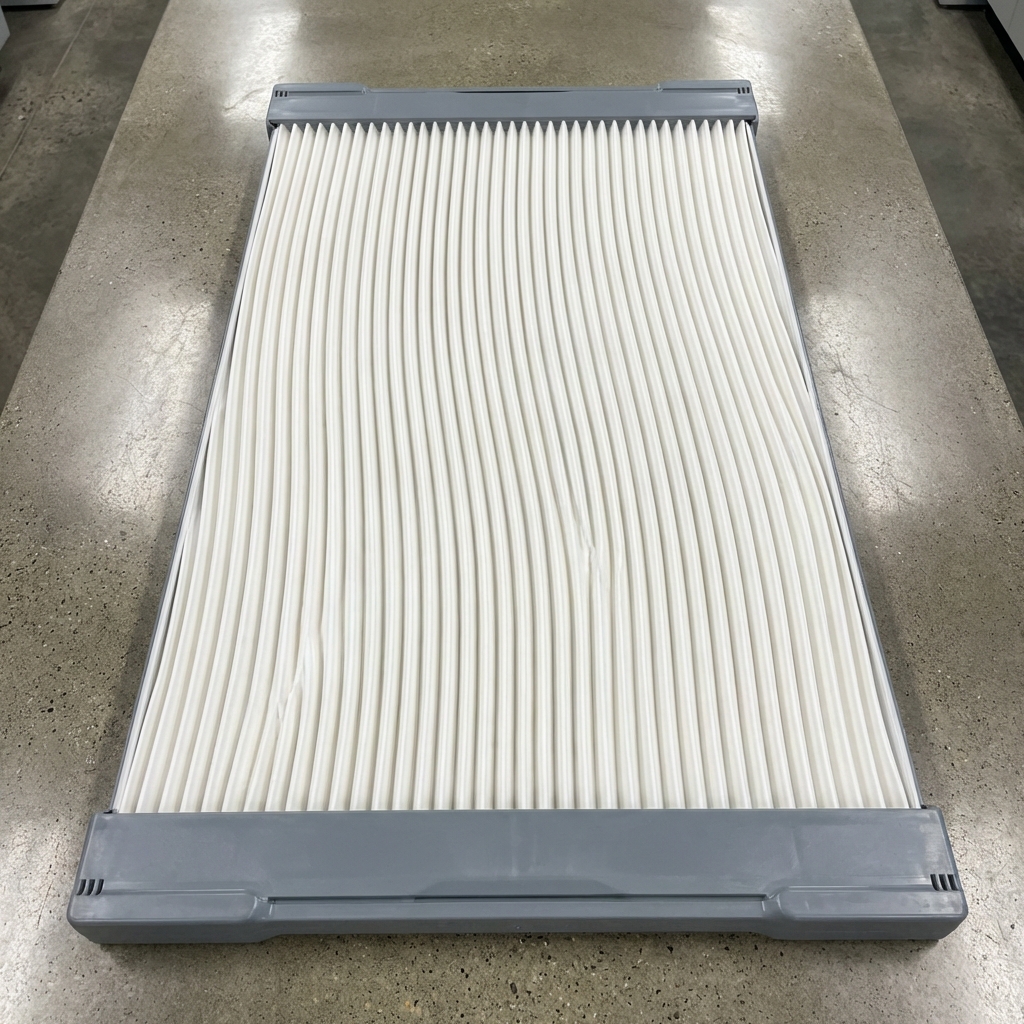
Aqueous Italia hybrid flat sheet membranes feature a corrugated, edge-potted construction, intentionally engineered to merge the hydraulic efficiency of hollow fibre membranes with the mechanical robustness and serviceability of flat sheet formats. The corrugated geometry is not cosmetic—it is a functional hydraulic structure designed to improve flux stability, fouling resistance, and mechanical integrity under submerged MBR operating conditions.

With long operational life, low maintenance requirements, and superior contaminant removal, Aqueous Italy’s tubular membranes provide a reliable, cost-effective solution for municipalities and industries seeking sustainable water reuse, safe discharge, and dependable filtration performance.
Corrugated Strength

Reinforced corrugated structure enhances stiffness and durability, preventing membrane deformation during intense aeration and long-term operation.

Higher Filtration Area

Increased effective surface area per panel enables higher flux, improved productivity, and better packing efficiency compared to conventional flat sheets.

Key Engineering Advantages

Corrugated hybrid design delivers superior strength, higher productivity, and improved fouling resistance for demanding water and wastewater treatment environments.

Enhanced Mechanical Strength
  • Corrugated structure improves out-of-plane stiffness
  • Reduces membrane flutter and deformation during aeration
  • Edge potting distributes loads to frame
  • Handles higher air scouring without fatigue or tearing
Higher Effective Filtration Area
  • Greater true membrane surface vs flat sheets
  • Higher sustainable flux at similar TMP
  • Better productivity per module
  • No fibre crowding limitations of hollow fibre systems
Superior Hydrodynamics & Fouling Control
  • Corrugation creates localized turbulence
  • Disrupts cake layer formation
  • Reduces concentration polarization
  • Uniform scouring with no dead zones or shielding

0

Systems Delivered

0

Membranes Installed

0

Years of Expertise

0

Countries Served

Comparison

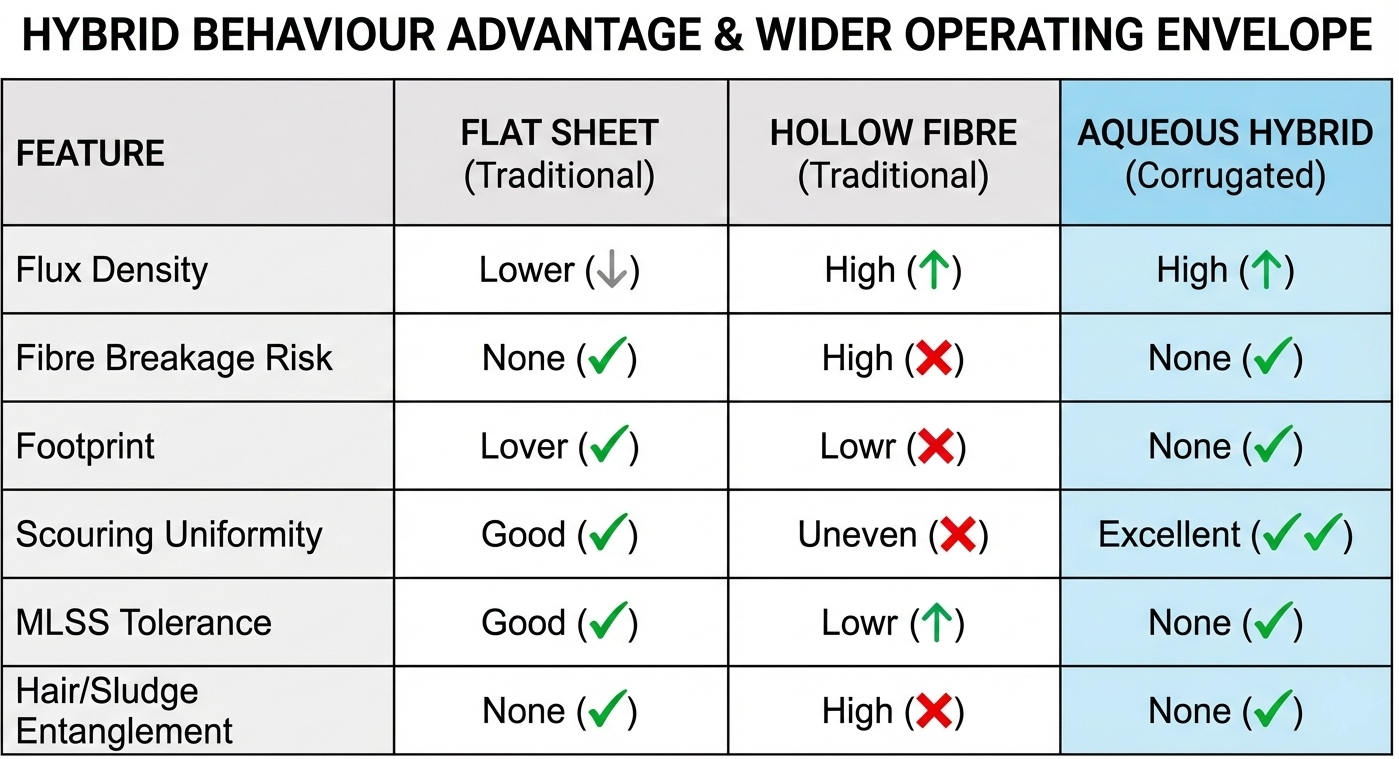
Why Aqueous Hybrid is Better?

Tubular Membrane Technical Diagram

Aqueous Hybrid Corrugated Flat Sheet Membranes combine the structural strength of ceramic technology with advanced hydrodynamic design to deliver superior filtration performance. Compared to conventional flat sheet and hollow fibre membranes, the hybrid architecture provides higher durability, improved fouling resistance, and more stable long-term flux.

The engineered corrugated profile increases effective membrane surface area while enhancing turbulence during aeration, ensuring uniform scouring and reduced clogging. This results in lower energy consumption, fewer cleaning cycles, and significantly extended membrane life.

  • ✔ Higher surface area and sustainable flux
  • ✔ Stronger structure with reduced membrane fatigue
  • ✔ Better fouling control and easier cleaning
  • ✔ Lower operating and maintenance costs
  • ✔ Longer service life than polymeric or hollow fibre systems

Membrane Microstructure & Filtration Mechanism

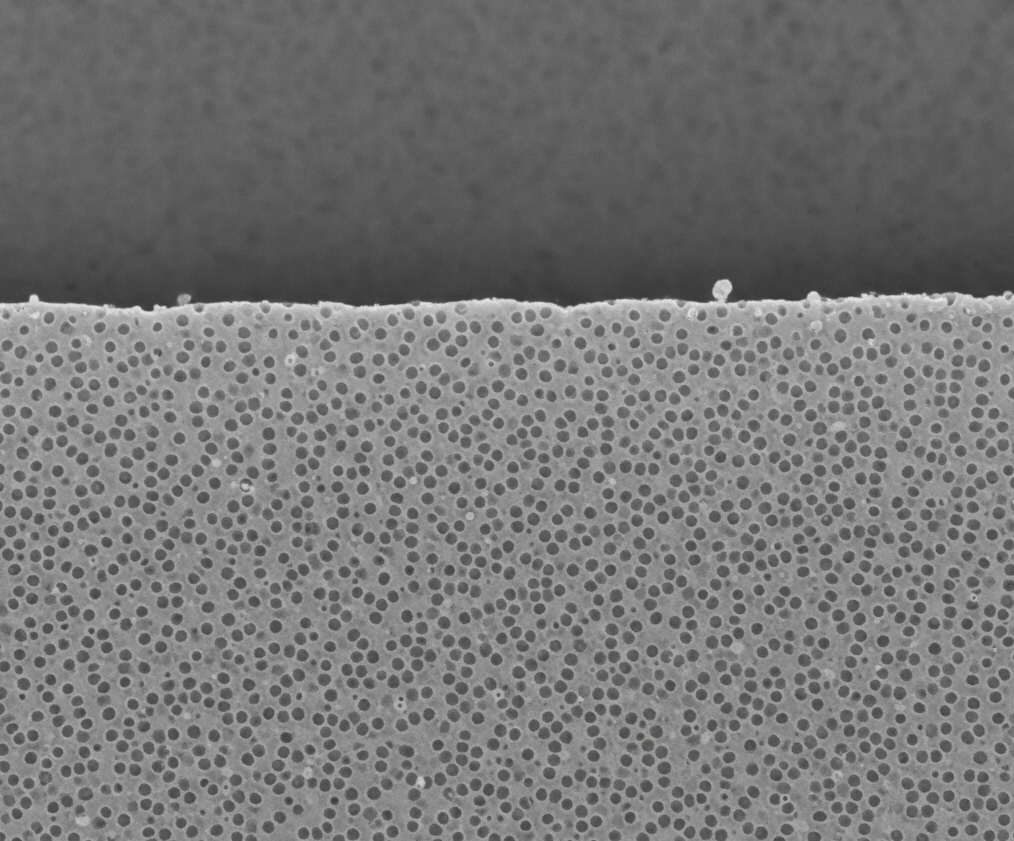
At the microscopic level, Aqueous Italia’s hybrid corrugated flat sheet membranes are engineered with a highly uniform and interconnected porous matrix. This advanced structure enables stable ultrafiltration performance in submerged systems while maintaining high flux, low fouling, and consistent particle rejection even under demanding operating conditions.

The optimized pore architecture ensures that filtration occurs primarily at the surface and near-surface layers, preventing deep pore penetration and minimizing irreversible fouling. Combined with permanent hydrophilicity, the membrane naturally repels oils, organics, and sludge, allowing only clean water to pass through efficiently.

Uniform Pore Distribution
Narrow and consistent pore sizes ensure reliable particle rejection and stable permeate quality.
Interconnected Porous Network
Fully open pore pathways promote smooth water flow while reducing internal blockage and resistance.
Surface Filtration Mechanism
Near-surface filtration minimizes deep fouling, enabling easier cleaning and longer membrane life.
Permanent Hydrophilic Chemistry
Low surface energy reduces organic adhesion and sludge buildup for improved anti-fouling performance.
Micro-Scale Flow Acceleration
Corrugation peaks and valleys accelerate local flow, creating shear gradients that disrupt foulant attachment.
Dynamic Pressure Fields
Alternating pressure and velocity zones prevent cake layer compaction and maintain higher permeability.
Uniform Aeration Exposure
Flat corrugated surfaces ensure even scouring across the membrane, eliminating dead zones and uneven fouling.

Corrugation Effect at Micro-Scale

Beyond improving macro-hydraulics, the engineered corrugated geometry actively enhances filtration performance at the microscopic level. The structured surface modifies local flow behaviour across the membrane, increasing shear forces and reducing the likelihood of foulant deposition and pore blockage.

This dynamic hydrodynamic environment continuously disturbs sludge and cake layer formation, enabling longer operating cycles, stable flux, and lower cleaning frequency. Unlike hollow fibre systems where shielding and stagnation can occur, the open flat corrugated design ensures every membrane surface receives uniform aeration and effective scouring.

The result is sustained permeability, improved energy efficiency, and significantly reduced fouling during long-term submerged operation.

Manufacturing Process

Engineered for Strength & Precision

01

Raw Materials

High-grade clay and ceramic compounds selected for purity and consistency.

02

Formation

Extrusion into precise shapes creating a robust membrane substrate.

03

Sintering

Fired above 1,200°C for exceptional durability and controlled porosity.

04

Assembly

Membranes assembled into modular systems for scalable installations.

Operation & Maintenance

Aqueous membranes are engineered for reliable long-term operation with minimal operator intervention. Integrated cleaning mechanisms such as automated backwashing, air scouring, and surface spray systems effectively control fouling and sustain high permeability.

These low-maintenance features reduce downtime, extend membrane life, and ensure consistent filtration performance even in demanding wastewater environments.

Automatic Backwashing
Reverses flow to dislodge solids and restore flux efficiently.
Air Scouring
Air bubbles create turbulence to prevent cake layer buildup.
Spray / CIP Cleaning
Quick chemical or spray washes remove fouling for optimal recovery.

Why Choose Aqueous Ceramic Membranes?

Thermal Stability
Operates reliably at extreme temperatures without degradation.
Chemical Resistance
Handles aggressive chemicals and wide pH ranges safely.
Long Service Life
Durable construction ensures years of stable operation.
Energy Efficient
Low-pressure operation reduces energy consumption and costs.